24 November 2026
How Are Spanish Carnations Prepared for Export?
Presented by @stemnotes12
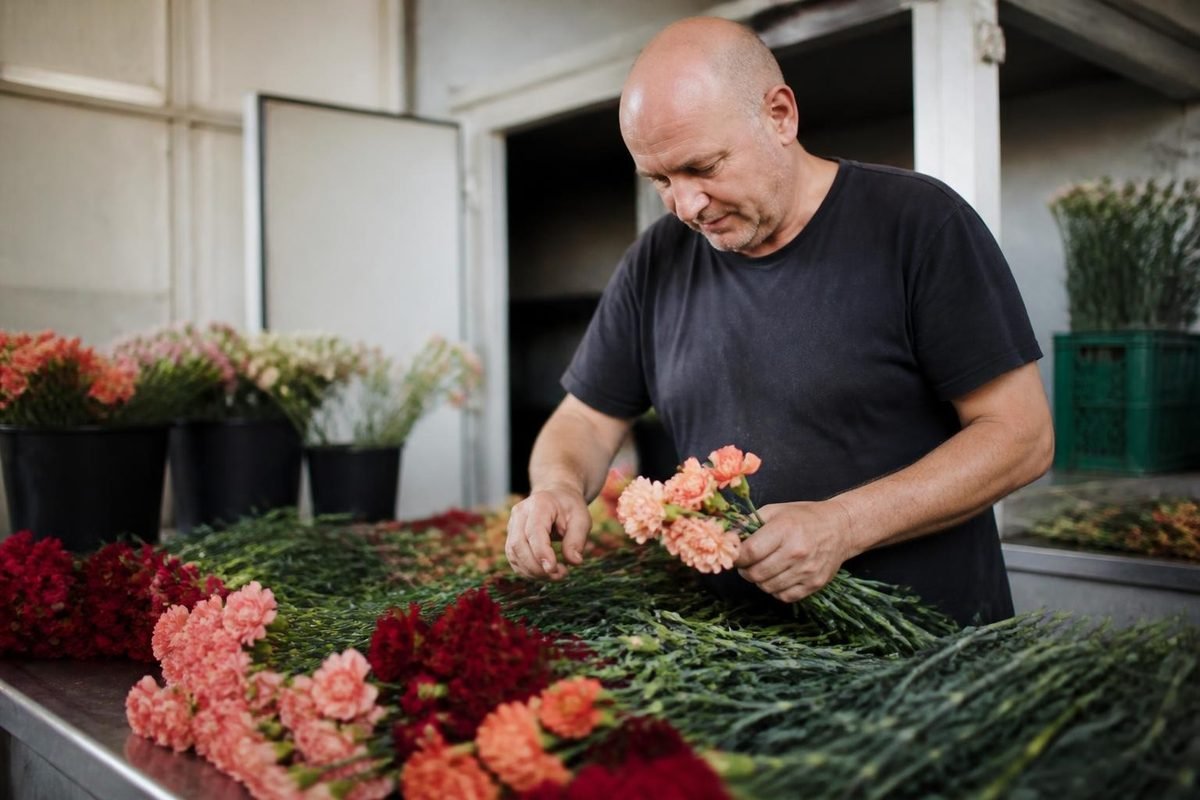
Spanish carnations are prepared for export by cutting them at a suitable stage, sorting the stems, packing them securely and keeping them cool during transport. The details depend on the buyer and destination, but the aim is the same: flowers that arrive fresh and open well.
Cutting at the right stage
Growers cut carnations before they are fully open, often when the buds show colour and the petals have begun to unfurl. A tight bud may travel well but can struggle to open; a fully open flower is more vulnerable to damage. The preferred stage can vary with the variety and the length of the journey.
Cutting is only the beginning. Stems are moved out of the field or greenhouse and handled with care so petals are not bruised. Clean tools and containers help limit the spread of organisms that can shorten vase life.
Sorting and bunching
At the packing area, flowers are checked for quality and sorted into groups that suit the order. Workers remove damaged or unsuitable stems and make bunches that are consistent in appearance. Depending on the buyer, the checks may include:
- Stem length and strength
- Flower colour and stage of opening
- Signs of bruising, pests or disease
- Uniformity within each bunch
Leaves low on the stems may be removed, particularly where they would sit in water. Bunches are secured without crushing the stems, and sleeves or other protective materials can help keep the flower heads apart during handling.
Cooling and packing for the road
Cut flowers continue to lose water after harvest. Prompt cooling slows their development and helps preserve quality, while clean water can help stems stay hydrated before dispatch. Carnations are commonly transported under refrigeration, with the temperature managed to avoid both excessive warmth and freezing damage.
Bunches may travel in boxes or in containers with water, depending on the transport system and the customer. Boxes need enough protection to keep flowers from shifting or being crushed. A journey is not just the time on the road: loading, unloading and waiting also matter, so keeping the flowers cool throughout is important.
Documents and destination checks
Shipments within the European Union generally move without the customs declarations required for exports to countries outside the EU. Trade documents still identify the goods and parties involved, and plant health rules may apply in particular circumstances.
For destinations outside the EU, the exporter must check the importing country's current rules. A phytosanitary certificate or inspection may be required. These requirements can change, so the route and destination should be checked before the flowers are packed and dispatched.
Questions about the journey
Are carnations always shipped in water?
No. They can be transported dry in protective packaging or in containers with water, depending on the arrangements for the journey.
Why are the flowers kept cool?
Cooling slows flower development and reduces water loss, helping the stems remain in good condition until they reach the buyer.
Can every destination be served with the same paperwork?
No. Requirements differ between EU and non EU destinations, and importing countries can have their own plant health rules.
Worth a look: fixes for wilting cut flowers